
Performance Marketing Trends
to Watch
From AI-powered advertising and smarter automation to first-party data and creator-led campaigns — these are the performance marketing trends businesses should be watching closely.
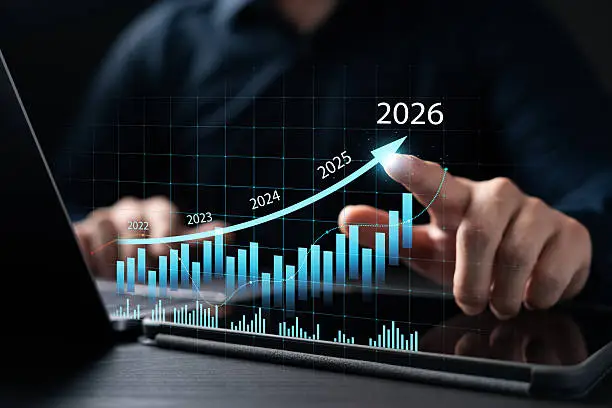
Performance marketing has always been about one thing: measurable growth.
Unlike traditional marketing, where success can sometimes be difficult to quantify, performance marketing focuses heavily on measurable actions such as clicks, leads, purchases, conversions, customer acquisition cost, and return on ad spend.
But the way businesses achieve those results is changing rapidly.
Artificial intelligence is becoming deeply integrated into advertising platforms. Search is becoming more conversational. Advertising platforms are taking greater responsibility for targeting and creative optimization. Businesses are paying more attention to first-party data and attribution. Meanwhile, short-form video and creator content continue to influence how customers discover and evaluate brands.
For businesses running Google Ads, Meta Ads, social media campaigns, or other digital advertising, understanding these changes is becoming increasingly important.
The future of performance marketing isn't simply about spending more money. It's about using better data, stronger creative, smarter automation, and a deeper understanding of customer intent.
Here are the key performance marketing trends to watch.
AI Is Becoming the Core of Performance Marketing
AI is no longer just an optional tool for marketers. It is becoming part of the advertising infrastructure itself.
Platforms such as Google Ads are increasingly using AI to identify relevant audiences, match search queries, optimize creative assets, adjust bids, and find additional conversion opportunities.
Google's AI Max for Search, for example, combines expanded search-term matching, creative optimization, and final URL expansion to help campaigns reach relevant queries beyond traditional keyword-based approaches.
This changes the role of the performance marketer. Instead of manually controlling every individual variable, marketers increasingly need to focus on:
- Setting the right business goals
- Providing quality data
- Creating strong creative assets
- Establishing audience and brand controls
- Monitoring performance
- Testing strategies
- Interpreting results
What this means for businesses
AI doesn't eliminate the need for marketers. It changes what marketers spend their time doing. The competitive advantage increasingly comes from knowing how to give AI systems the right inputs and then using human judgment to evaluate their output.
Google Search Is Becoming More AI-Driven
Search advertising is going through one of its biggest changes in years. People aren't always searching with short keywords anymore. They are increasingly asking detailed questions, comparing options, exploring products, and interacting with search through more conversational experiences.
Google's AI Mode and AI Overviews are changing how people discover information, while Google is also testing new advertising formats designed specifically for AI-powered Search experiences. Google has described this shift as a move beyond traditional keyword-based Search toward more conversational discovery.
For performance marketers, this means that simply targeting a list of exact keywords may not be enough.
Search intent becomes even more important
Brands need content, landing pages, and advertising messages that clearly communicate:
- What they offer
- Who they serve
- What problem they solve
- Why they're different
- What action customers can take
The future of Search advertising is likely to reward businesses that provide strong contextual signals and useful information, not just keyword repetition.
AI-Powered Campaign Automation Will Continue Growing
Manual campaign management is becoming less dominant.
Google's Smart Bidding already uses AI to optimize bids at auction time based on signals and predicted conversion outcomes. Google also introduced changes to Smart Bidding strategy naming while keeping the underlying bidding behavior the same.
At the same time, AI Max is expanding automation across Search campaigns. Google says AI Max can use broad match and keywordless technology to find relevant queries while also optimizing creative and landing-page relevance.
The important shift
The question is no longer:
"How do I manually optimize every campaign setting?"
It's increasingly:
"How do I build a campaign structure that gives automation the right data and constraints?"
This requires better conversion tracking, cleaner account structures, stronger creative, and clearly defined campaign goals. Automation works best when the underlying strategy is strong.
Creative Is Becoming a Major Performance Advantage
As targeting becomes increasingly automated, creative can become one of the most important ways to differentiate your advertising. A platform can find potential customers, but the advertisement still needs to give those people a reason to stop scrolling, pay attention, and take action.
This is especially important on platforms such as Instagram, Facebook, YouTube, and other visual channels. Brands are therefore investing more heavily in:
- Short-form video
- UGC-style content
- Product demonstrations
- Educational videos
- Testimonials
- Before-and-after creatives
- Strong hooks
- Multiple creative variations
Why creative testing matters
Instead of creating one advertisement and running it for months, performance marketers can test different hooks, headlines, visuals, offers, CTAs, video openings, and messaging angles.
The goal isn't simply to make an advertisement look beautiful. It's to discover which creative message generates the strongest business result.
In performance marketing, creative isn't decoration. Creative is part of the conversion strategy.
Short-Form Video Will Remain a Performance Marketing Powerhouse
Short-form video has become one of the most important formats for digital advertising. Platforms such as Instagram, Facebook, YouTube, and TikTok have trained audiences to consume information quickly — creating an opportunity for brands to communicate their value proposition within seconds.
A good short-form advertisement can:
- Capture attention
- Introduce a problem
- Present a solution
- Demonstrate value
- Create curiosity
- Drive an action
The first few seconds are especially important. If the opening doesn't give people a reason to continue watching, the rest of the advertisement may never be seen.
What businesses should test
Instead of relying on one polished video, businesses should consider creating multiple variations. For example:
Hook A (Problem-focused): "Getting traffic but no leads?"
Hook B (Result-focused): "Here's how businesses can turn website visitors into customers."
Hook C (Curiosity-focused): "Most businesses make this mistake with their website."
The winning message can then be tested and scaled.
Creator and UGC-Style Advertising Will Become More Important
Consumers don't always want advertising to look like advertising. Creator content and user-generated-content-style advertising can feel more natural because they resemble the content people already consume on social platforms.
Google is also expanding creator-related advertising opportunities. In India, Google announced YouTube Affiliate Partnerships Boost, allowing brands to scale creator videos with tagged products through ad campaigns.
This reflects a broader trend: creators are becoming part of the performance marketing ecosystem, not just brand awareness campaigns.
Why creator content can work
Creators can provide:
- Demonstrations and tutorials
- Reviews
- Personal experiences
- Testimonials
- Product comparisons
- Social proof
For businesses, this can create a bridge between organic creator influence and measurable paid advertising. The most effective approach isn't necessarily finding the biggest creator — it may be finding the creator whose audience closely matches your ideal customer.
First-Party Data Is Becoming More Valuable
Data has always been important in performance marketing. But businesses are becoming increasingly careful about how they collect, store, and use customer information.
As privacy expectations and platform restrictions evolve, relying entirely on external tracking signals can create challenges for advertisers. This makes first-party data increasingly valuable.
First-party data can include information collected directly through legitimate customer interactions, such as:
- Website enquiries
- Purchases
- Email subscribers
- Customer accounts
- CRM records
- Lead forms
- Customer preferences
- Website interactions
Why this matters
A business that understands its own customers can build stronger audiences and make better marketing decisions. Instead of depending entirely on platform-level audience targeting, businesses can combine advertising-platform data with their own customer information and conversion history. The result can be a more resilient marketing system.
Measurement Is Moving Beyond Clicks and Last-Click Attribution
One of the biggest problems in digital marketing is figuring out what actually caused a conversion. A customer might see an Instagram Reel, search the brand on Google, visit the website, read a blog, click a Google Ad, return directly, and finally make a purchase.
Which channel deserves credit? That's not always easy to answer.
This is why performance marketers are increasingly looking beyond simple last-click attribution. Google's marketing developments include greater emphasis on cross-channel measurement and tools designed to help advertisers understand broader customer journeys.
The bigger question
Instead of asking "Which ad got the conversion?" businesses increasingly need to ask "Which combination of marketing activities contributed to the customer journey?"
This leads to better budget allocation and more realistic performance evaluation.
Landing Page Optimization Will Become Even More Important
Getting someone to click an advertisement is only half the job. The landing page needs to convert that visitor.
You can have great targeting, strong creative, excellent ad copy, and a competitive offer — but if the landing page is confusing, slow, untrustworthy, or difficult to navigate, the campaign can still fail.
High-performing landing pages generally need:
- Clear messaging — visitors should immediately understand what you're offering
- Strong headline — it should connect with the promise made in the advertisement
- Relevant CTA — tell visitors exactly what to do next
- Trust signals — reviews, testimonials, case studies, guarantees, and relevant proof
- Simple forms — don't ask for unnecessary information
- Mobile optimization — a large percentage of paid traffic can come from mobile devices
This is why performance marketing should never be treated as "just advertising." The entire journey matters.
Personalization Will Become More Intelligent
People respond better to messages that feel relevant to them. AI is making it easier for advertising platforms to tailor messaging based on different signals and predicted intent.
Google's AI-powered advertising tools, for example, are increasingly designed to adapt creative and targeting based on customer interests and search behavior.
But personalization doesn't mean every customer needs a completely different advertisement. It can be as simple as creating different messaging for different customer segments. For example:
Startup: "Launch your business with a professional online presence."
Established business: "Turn your existing website into a stronger lead-generation channel."
Local business: "Get discovered by customers searching for your services nearby."
The underlying service may be the same. The message changes according to the customer's needs.
Performance Marketing Will Become More Full-Funnel
Businesses increasingly understand that not every customer converts immediately. Some people need multiple interactions before making a purchase. That's why successful performance marketing strategies often include different campaigns for different stages.
Top of funnel — generate awareness
- Video campaigns
- Educational content
- Creator content
- Broad audience campaigns
Middle of funnel — build consideration
- Case studies
- Testimonials
- Product demonstrations
- Comparison content
Bottom of funnel — generate conversions
- Lead-generation campaigns
- Search ads
- Remarketing
- Offers and consultation campaigns
A full-funnel approach helps businesses avoid judging every campaign by the same metric. A top-of-funnel campaign may be designed to introduce the brand, while a bottom-of-funnel campaign may be expected to generate leads directly.
AI Will Also Change Marketing Reporting
Reporting is another area where AI is becoming increasingly useful. Google announced new AI features that can provide performance summaries, generate visual reports through natural-language prompts, and benchmark performance against similar businesses.
This can reduce the amount of manual time marketers spend collecting and organizing information.
But automated reporting doesn't mean marketers should stop analyzing data. The real value comes from asking better questions:
- Why did conversions increase?
- Why did CPA increase?
- Which creative drove the strongest results?
- Which audience generated the highest-quality leads?
- Which landing page performed better?
- Which campaign deserves additional budget?
AI can help surface patterns. Human strategy still determines what those patterns mean for the business.
Search, Social, and AI Experiences Are Converging
Customers no longer follow a simple path such as Google → Website → Purchase.
They might discover a business through Instagram, research it on Google, watch a YouTube video, ask an AI tool for recommendations, return to the website, and then contact the company. Google's own developments reflect this broader shift across Search, YouTube, AI experiences, and commerce.
This means businesses need to think beyond individual platforms. Your website, SEO, Google Ads, Meta Ads, social media, content, reviews, and brand presence should reinforce each other.
The strongest performance marketing strategies increasingly look like connected ecosystems rather than isolated campaigns.
How Businesses Can Prepare for These Trends
You don't need to adopt every new technology immediately. Start with the fundamentals.
Fix your tracking
Make sure important conversions are being measured accurately.
Improve your creative process
Create multiple ad variations and test different messages.
Strengthen your website
Your website and landing pages should be designed to convert traffic into meaningful actions.
Build first-party data
Develop legitimate ways to collect and use customer information responsibly.
Experiment with AI
Use AI for research, creative testing, reporting, analysis, and campaign optimization — but maintain human oversight.
Think beyond one platform
Build a marketing system where Search, social, content, and your website support each other.
Focus on business outcomes
Don't optimize exclusively for impressions, clicks, or cheap leads. Look at qualified leads → customers → revenue → profit.
That's where performance marketing ultimately proves its value.
Final Thoughts
Performance marketing is becoming more intelligent, automated, and interconnected.
AI is changing how campaigns are targeted and optimized. Search is becoming increasingly conversational. Creative quality is becoming more important. Creator content is moving further into measurable advertising. First-party data is becoming more valuable. And measurement is expanding beyond simple clicks and last-touch attribution.
But despite all these changes, the fundamentals remain the same. Understand your customer. Create something valuable. Deliver the right message. Track what matters. Test continuously. Optimize for business results.
Technology can make performance marketing faster and more efficient, but technology alone doesn't create a successful campaign. The brands that win will be the ones that combine AI and automation with strong strategy, compelling creative, accurate measurement, and a deep understanding of their customers.
Performance marketing isn't becoming less human. It's becoming more intelligent — and more focused on measurable business growth.
Frequently Asked Questions
Ready to build a performance
marketing system that scales?
Let's combine AI-powered targeting, strong creative, and accurate measurement to drive real, measurable growth.